 Banff City Guide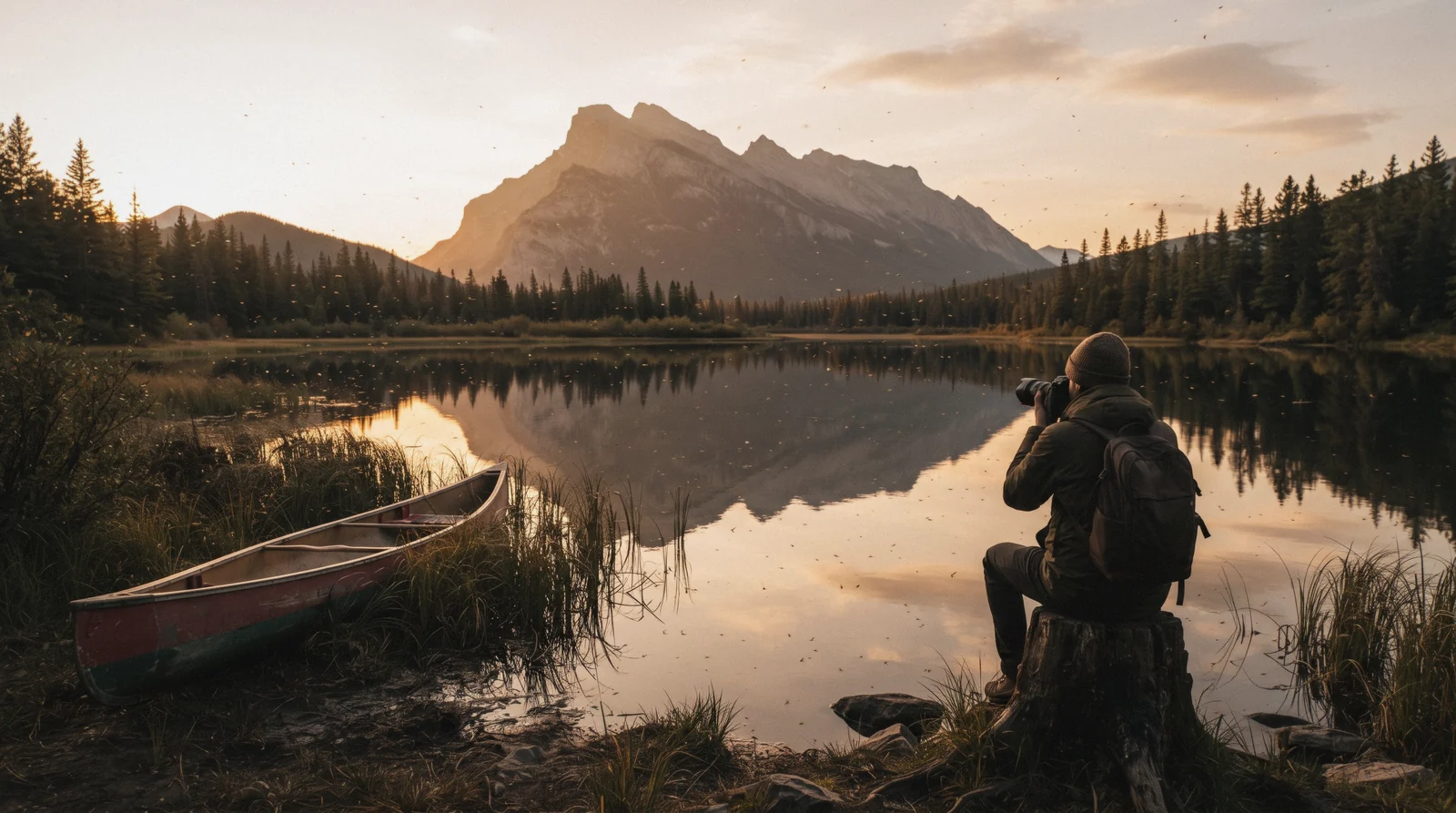
Vermilion Lakes: Rundle's Mirror
The Vermilion Lakes are a chain of shallow wetlands on the edge of Banff, a short drive from town along the Bow Valley. They cost nothing to visit and give back the best Mount Rundle reflection in the park. Pair them with other free things to do in Banff for a low-budget day. The whole valley, start to finish: the Banff homepage.
Quick answer The short answer on the Vermilion Lakes
The Vermilion Lakes are a wetland chain just northwest of the town of Banff, reached off Mt Norquay Road via Vermilion Lakes Road. Entry is free and there are no gates or hours. Plan 45 to 90 minutes. The reason to come at a specific time is light: at sunset, Mount Rundle's face is reflected in the calm water, and that reflection is the shot the lakes are known for. In winter, warm spring water keeps parts of the shallows ice-free and steaming in the cold. Normal Banff National Park admission applies to the park as a whole.
Key takeaways
- Sunset is the headline event. Arrive 30 to 45 minutes before the light goes and claim a spot on the shoreline.
- No operator publishes a tour of the lakes themselves. If you want water in your day, the Lake Louise and Moraine Lake tour with a canoe paddle covers the bigger lakes instead.
- It is one of the most rewarding free things to do in Banff, and it works after dark too, as our Banff at night guide explains.
- Watch the shoreline for elk and waterbirds, and follow the rules in our wildlife in Banff guide.
Key facts
Opening hours
| Shoreline day-use, open year-round |
|---|
Planning it
- Time needed
- 45-90 minutes
- Book ahead
- Optional — walk-up usually fine
- Address
- Vermilion Lakes Road, off Mt Norquay Road
Tickets and What Your Money Buys
There is no ticket for the Vermilion Lakes themselves. The comparison below shows what you would pay nearby if you want a guided or paid experience instead of, or alongside, the free shoreline. The official row is the Parks Canada park entry page. Tour prices are the tour listings' own figures in dollars.
Do you want the free shoreline at your own pace, or a guided day that bundles the bigger lakes?
| Option | Price | Time needed | Best for | Book |
|---|---|---|---|---|
| Park entry (covers the Vermilion Lakes shoreline)Anyone happy to drive or walk in and photograph on their own. | Free at the lakes, park pass applies | 45-90 minutes | Everyone. No reservation needed. | Official site |
| Lake Louise and Moraine Lake Tour with CanoeTravellers who want a canoe on the water without renting their own. | Listed at checkout | See the listing | Paddlers who want the famous lakes handled for them | Check Availability |
| Best of Banff Signature Express TourPeople who want the headline viewpoints with a guide and no driving. | $26.20 | About 2 hours | First-afternoon visitors short on time | Check Availability |
The lakes have no admission of their own. A valid park pass is required anywhere in Banff National Park, bought at gates, visitor centres or online through Parks Canada. Tour figures are the listing prices in dollars. Figures current for in Q3 2026.
Tours That Pair Well With the Lakes
No operator runs a tour of the Vermilion Lakes. These bookable options cover the water and viewpoints nearby.
 from $26.20
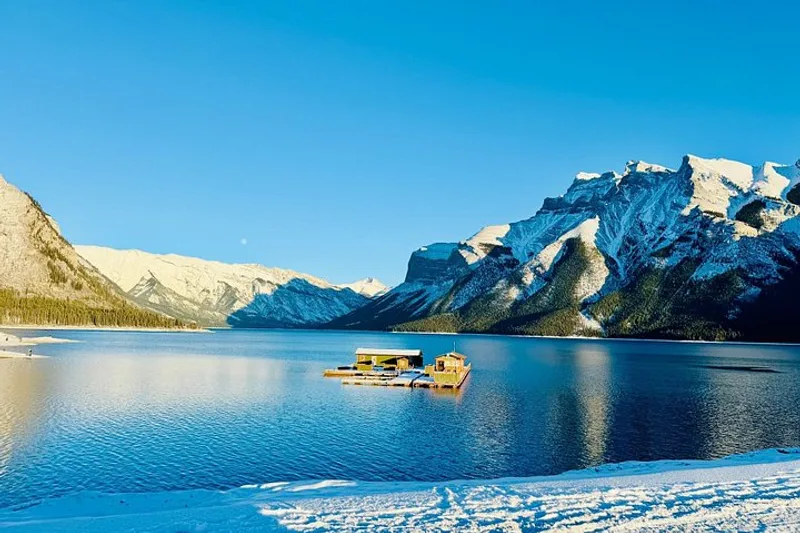
Best of Banff: Signature Express Tour
A short guided loop of the town's headline stops — falls, hotel viewpoints and lake shores — for a first afternoon.
Check Availability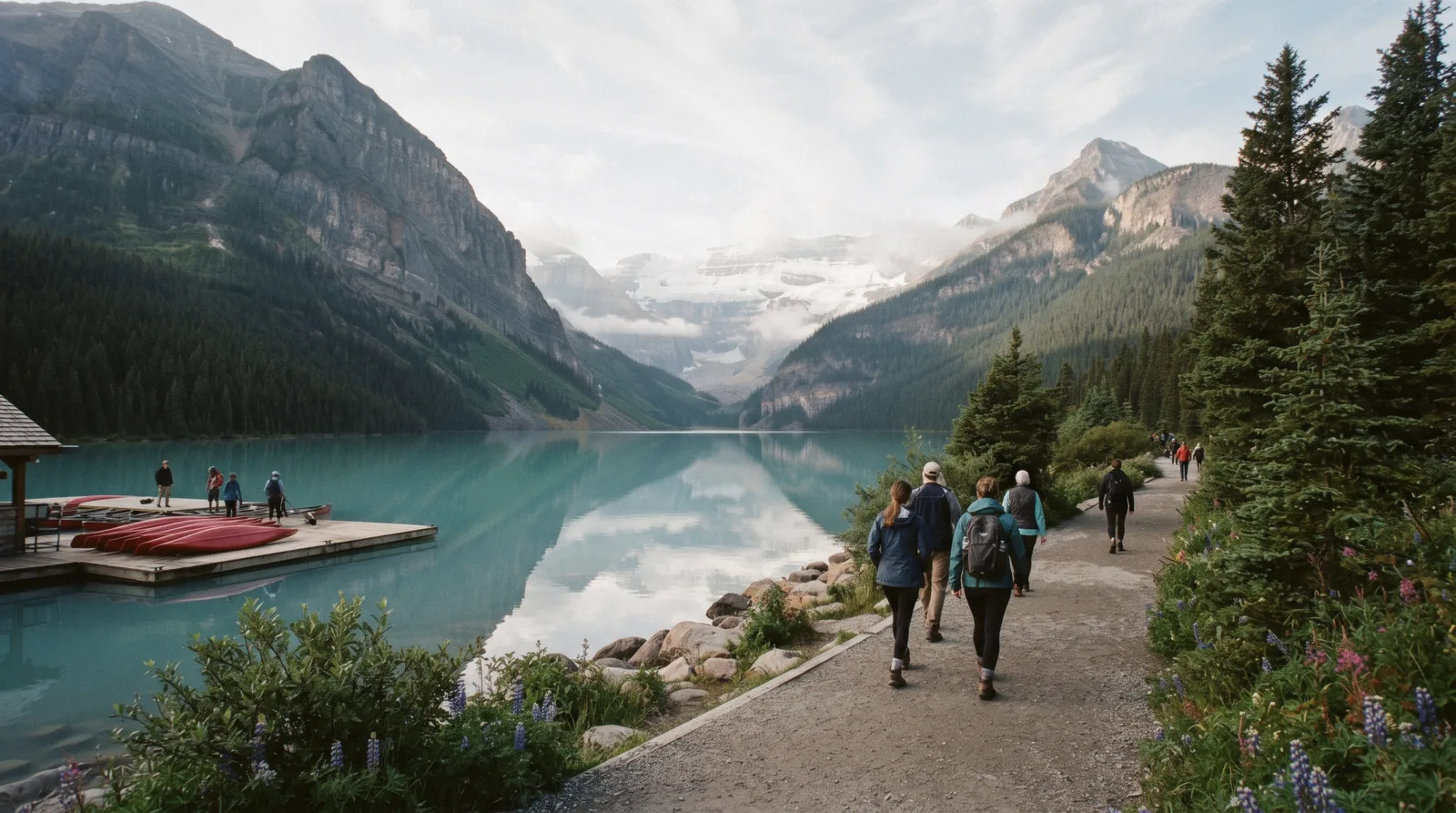 from Listed at checkout
Lake Louise and Moraine Lake Tour with Canoe
The two-lake day with a canoe paddle built in — the closest a tour gets to the postcard without renting your own.
Check Availability from $101.18
Banff Highlights and Wildlife Small-Group Tour
A half-day loop of the valley's best animal country — Minnewanka, Two Jack, the Springs — with a guide who reads the meadows.
Check Availability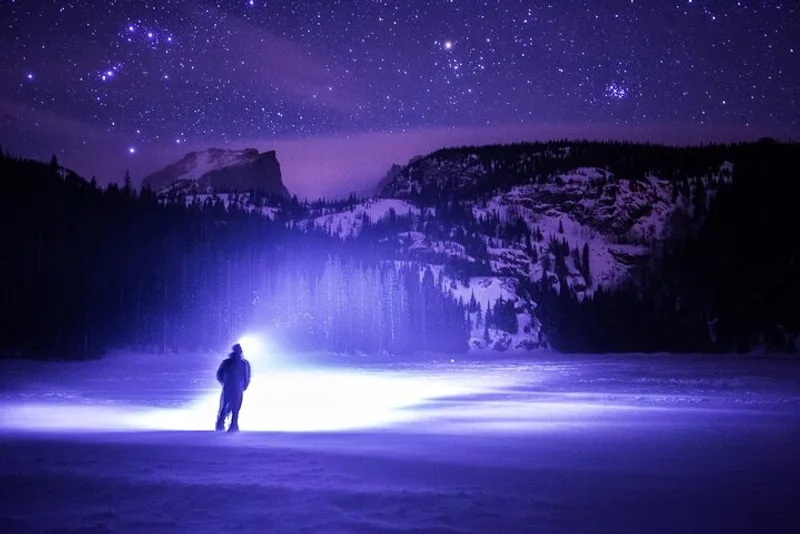 from $66.97
The Banff Stargazing Walking Tour
A two-hour walking tour under the dark-sky corridor with a guide telling the constellations and the park's night rules.
Check AvailabilityPrices, ratings and details are the platform's own. dollar figures are the listed prices — the platform bills in your account's currency.
The Three Lakes and the Wetlands
The Vermilion Lakes sit in a wetland chain just northwest of town along the Bow. Understanding what you are looking at makes the short drive worth it at any hour.
A Chain, Not a Single Lake
Drivers pass through three broad, shallow basins in sequence along Vermilion Lakes Road. They are fed by the Bow and by warm mineral springs, which is why edges of the water stay open in deep winter. The road follows the chain and pulls off at several points, so you can visit one shoreline or work your way along all three.
There is no trail head, gate or ticket. You park, step out and you are there.
Why the Wetlands Matter
This is functioning wetland, not a manicured viewpoint. Reeds and shallow margins shelter birds, beavers and the elk that graze the meadows at dawn and dusk. Move quietly and you will hear the marsh working: red-winged blackbirds in the reeds, the slap of a beaver tail, bull elk bugling during the rut in late summer and fall.
Keep the legal distances from any animals you meet. Parks Canada recommends staying 30 metres from elk and deer and 100 metres from bears, wolves, cougars and coyotes, and it is illegal to feed, entice or disturb any wildlife in the park.
What No Official Page Publishes
A finding worth knowing: no Parks Canada page publishes trail distances, a marked trail network or an hours schedule for the Vermilion Lakes, because there is no built facility here to schedule. Parking, washrooms and food services are not stated by any official source. Treat the shoreline as a self-serve stop.
Use the facilities in town before you drive out, and pack out everything you bring.
How a Visit Usually Runs
Our estimate, based on the shape of the road and the pull-offs: most people spend 45 to 90 minutes here, which matches the figure in our key facts box. Photographers linger longer. The sequence below is how a first visit tends to play out.
| Stop | What you do | Our time estimate |
|---|---|---|
| First pull-off | Wide water and the first clean Rundle sightline | 10-15 minutes |
| Mid-chain shoreline | Reeds, beaver country, close reflections | 20-30 minutes |
| Far end of the road | Quieter water, fewer people | 15-20 minutes |
| Sunset session | One chosen spot, tripod down, wait for the light | 45 minutes or more |
Wetland and geography facts from the Parks Canada Banff visit pages. Wildlife distances and rules from the Parks Canada wildlife rules pages.
Sunset and Rundle's Reflection
Mount Rundle's reflection at sunset is the shot the lakes are known for. Here is how to be standing in the right place when it happens.
The Shot Explained
Mount Rundle rises in sheer banded layers to the south of the water. In the last hour of daylight its face catches warm light, and on a calm evening the still water between the reeds mirrors the whole wall. Because the lakes are shallow, the surface settles quickly after wind drops, so the reflection can appear only minutes before sunset.
That is the gamble and the reward. Some evenings the water never stills. Come twice if the first attempt fails.
Timing Your Arrival
We recommend arriving 30 to 45 minutes before sunset. That gives you time to park, walk the shoreline and choose a foreground of reeds or a log rather than settling for bare water. Sunset time itself is not published by any official page for this location.
Check a weather or astronomy app for the date you visit, and remember that in the Bow Valley the sun drops behind the ridges before the listed time. Midsummer brings very late light. Check our best time to visit Banff guidance for season trade-offs.
After the Light Goes
Stay a few minutes past sunset. The sky above Rundle often burns pink and orange for a quarter hour after the direct light has left the mountain, and the reflection continues. Once true dark falls the lakes sit under a dark-sky corridor, and the same shoreline that held photographers empties out.
Our Banff at night guide covers stargazing here and nearby, and a guided option exists if you want telescopes and a storyteller: the Banff Stargazing Walking Tour runs a two-hour dark-sky walk, or the Banff Nightfall Stargazing Tour adds transport and hot chocolate.
Photography Notes
Bring a tripod. Reflections reward long exposures, and the light falls fast in the valley. A polarising filter helps cut glare off the water in the hour before sunset.
Zoom wide for the full Rundle wall or compress with a longer lens from a pull-off further along the road. Morning works too, in its own quieter register. On still dawn mornings mist often hangs over the warm shallows, and the mountain catches first light while the town behind you is still asleep.
The Rundle sunset reflection is the lakes' defining sight, per the verified facts for this page. Park-wide visiting guidance from Parks Canada.
Canoeing and the Paddling Season
Flat, sheltered water a few minutes from town makes the lakes an obvious paddling question. The answer has a catch.
Can You Paddle Here?
No official Parks Canada page for the Vermilion Lakes states canoe access, launch points, rental facilities or a paddling season, so paddling arrangements here are not stated. There is no rental dock at the lakes. If you arrive with your own boat, launch details and any restrictions are likewise not published by an official source, so check with the Banff Visitor Centre at 224 Banff Avenue, open daily 9 am to 5 pm, before you plan a session on this water.
Where Rentals Actually Are
For guaranteed rental canoes, the established option is in town. The Banff Canoe Club rents from the corner of Wolf Street and Bow Avenue on the banks of the Bow River, 10 am to 7:30 pm, at $70 for the first hour per boat based on two people, then $35 per additional hour, with a third person in the canoe at $15 flat. No reservations are taken, so boats are first come, first served, and the operator prints no season dates on its site.
Note that this dock serves the Bow River, not the Vermilion Lakes.
Guided Water Days Instead
If the point of the paddle is the postcard, the big lakes do it at scale. The Lake Louise and Moraine Lake tour with a canoe paddle builds a canoe session into the two-lake day. A gentler option is the Canmore Bow River Scenic Float, a large-raft drift with no rapids that welcomes children.
Our own view is that the Vermilion Lakes reward the shore visitor most. The reflection is a shoreline experience, and the marsh is at its best when you are standing in it, not skimming over it.
Rental figures from the Banff Canoe Club rental page. Visitor Centre hours from Banff and Lake Louise Tourism.
Winter: The Misty Shallows
Most Banff lakes freeze solid. The Vermilion Lakes partially refuse, and that makes them a winter stop in their own right.
Water That Will Not Freeze
Warm springs feed parts of the chain, so in deep cold the shallows stay open and throw mist into air that sits far below freezing. January highs around Banff average -6.2 C with lows near -13.9 C in the long-term climate record, and on those mornings the steam rising off dark water against snow and Rundle is the reason locals drive out before work. The effect is strongest on the coldest, calmest mornings.
Access and Conditions
Vermilion Lakes Road stays reachable in winter, though no official page publishes its winter maintenance status, so drive to conditions. Ice covers the sections of the chain away from the spring inflow, and no official source states whether walking on the lake ice is safe or permitted here. Stay on the shoreline and the roadside pull-offs.
Dress for the temperature, not the car. Standing still for photography in January cold ends visits quickly.
Filling a Winter Day
The lakes slot easily into a cold-weather itinerary. They sit near the start of a loop that takes in other short stops, and they cost nothing. If you want a guided winter outing in the same valley, the Johnston Canyon Icewalk runs four hours into the frozen canyon with cleats and headlamps provided.
Our winter in Banff guide pulls the season together, and our Banff at night page covers the stargazing that cold clear nights deliver.
Winter behaviour of the springs and the misty shallows come from the verified facts for this page. Climate figures are long-term ERA5 reanalysis normals for Banff, 1995-2024.
Map of the Vermilion Lakes and Nearby
The lakes pin sits on the wetland chain northwest of the townsite. Use the other pins to build a loop for the same day.
Nearby: Build the Rest of the Day
The lakes sit close to several other headline stops. These pairings fill a half day without backtracking.
Cave and Basin National Historic Site
The cave and spring where Canada's national park idea began sits just off Cave Avenue, on the way to or from the lakes road. Adult entry is $8.69 (C$10) with summer hours of 9:30 am to 5 pm daily from mid May to mid October, and Parks Canada suggests planning at least 2 to 3 hours for the site.
Minutes away by road, our estimate Check AvailabilityBanff Gondola
Ride to the Sulphur Mountain summit for the view down onto the same valley, then finish at the lakes for the low-angle mirror of it. The ride takes about 8 minutes over a 1.6 km track, and a boardwalk of 368 shallow stairs each way leads to Sanson's Peak.
Short drive south of town, our estimate Check AvailabilityBow Falls
The wide drop on the Bow below the Banff Springs hotel grounds is an easy add-on, and the river that feeds the wetlands you have just been photographing.
In town, our estimate Check AvailabilityVermilion Lakes Questions
Do the Vermilion Lakes cost anything to visit?
No. The lakes themselves are free, with no gate, ticket or hours. Normal Banff National Park admission applies to the park as a whole, bought at park gates, visitor centres or online.
How much time should I allow for the Vermilion Lakes?
Plan 45 to 90 minutes for a first visit. Photographers waiting for sunset light often stay longer.
Where exactly are the lakes?
Off Vermilion Lakes Road, which turns off Mt Norquay Road just northwest of the Banff townsite. The wetland chain runs along the Bow. Exact driving minutes from your hotel are not stated by any official source, but the drive is short by Banff standards.
When is the best time to photograph the Vermilion Lakes?
Sunset, when Mount Rundle's face reflects in the calm water. Arrive 30 to 45 minutes before sunset to choose a shoreline spot. Calm, still evenings give the cleanest reflection.
Can you swim or canoe at the Vermilion Lakes?
Swimming is not addressed by any official page. For paddling, no launch points, rentals or season dates for these lakes are published by an official source, so check with the Banff Visitor Centre before bringing a boat. Rental canoes are available in town at the Banff Canoe Club dock on the Bow River.
Are the Vermilion Lakes worth visiting in winter?
Yes, for a different reason. Warm springs keep parts of the shallows open, and on cold calm mornings mist rises off the dark water with snow on the banks. Sections of the chain do freeze, and no official source states whether walking on the ice is safe, so stay on the shore.
Is there wildlife at the lakes?
The wetlands attract birds, beavers and elk, especially at dawn and dusk. Keep at least 30 metres from elk and deer and 100 metres from bears, wolves, cougars and coyotes, leash your dog, and report any large carnivore or aggressive elk to Parks Canada dispatch at 403-762-1470.
We may earn a commission if you book through one of our links, at no extra cost to you. Full affiliate disclosure