 Banff City Guide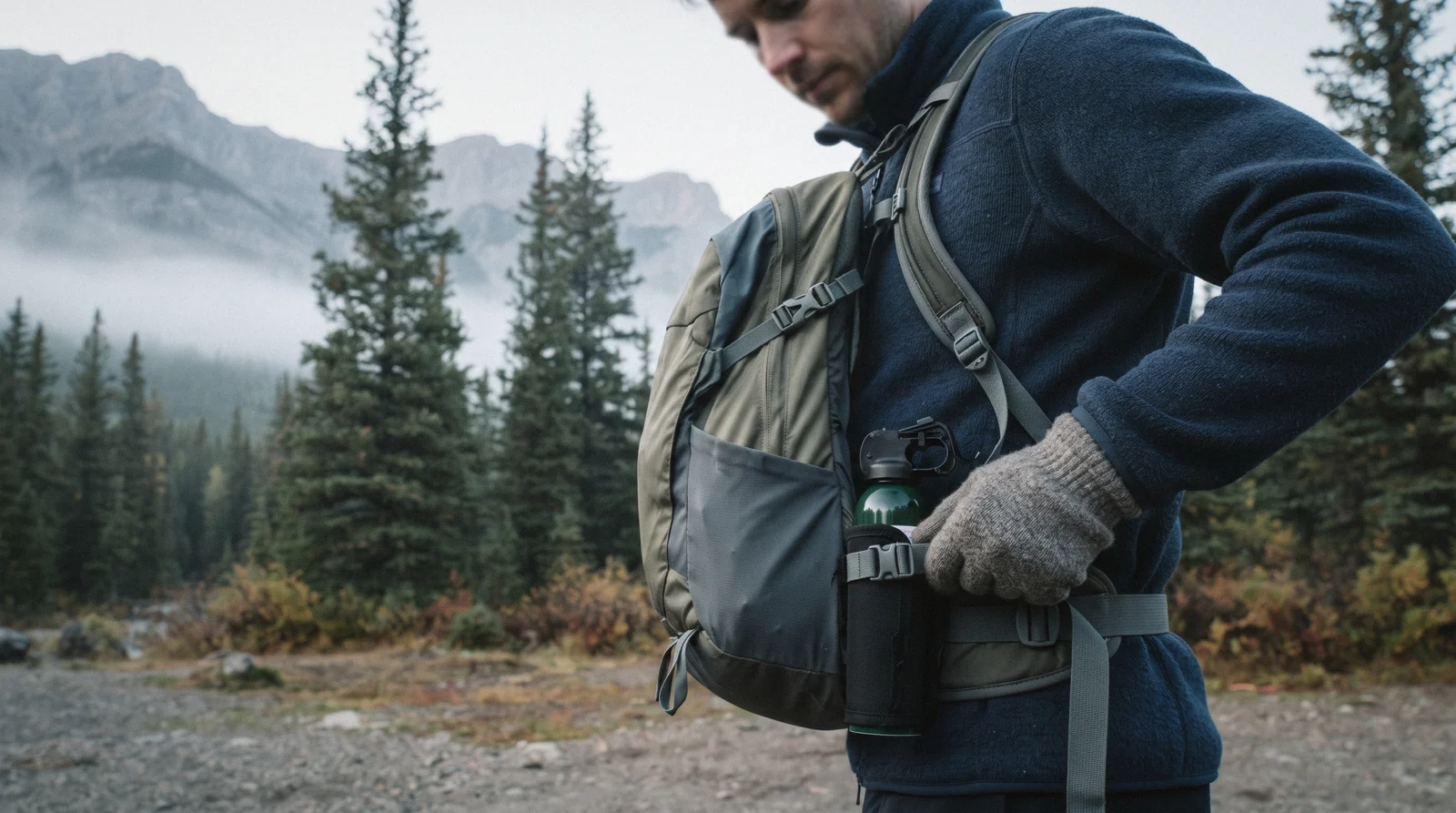
Is Banff Safe? Wildlife, Trails, Town
Is Banff safe? For almost every traveller, yes. Banff is a small town of about 8,000 people inside a national park, and the real risks are wildlife distances, icy trails and winter cold rather than crime. This page covers banff safety one topic at a time, starting with wildlife in Banff and working out to the trail, the road and the street. The whole valley, start to finish: the Banff homepage.
Quick answer The short answer on Banff safety
Yes, Banff is safe. Violent crime against visitors is rare and the town has no significant scam problem. The risks that actually send people to hospital are animal encounters, slips on icy trails, driving collisions with wildlife at dusk and hypothermia or frostbite in deep winter. Parks Canada asks everyone to stay 30 metres from elk and deer and 100 metres from bears, wolves, cougars and coyotes, and to carry bear spray year-round. Fines for breaking wildlife rules reach $17.74 (C$25),000. If you want animals without the guesswork, a guided loop such as the Banff Highlights and Wildlife Small-Group Tour keeps the distance rules for you.
Key takeaways
- Wildlife is the headline risk. Read the 30 m and 100 m rules in our wildlife safety banff section below.
- Trails are safe when you match the route to the season. Start with our hiking in Banff guide and the avalanche advice here.
- Winter is the season that bites. See the cold section below and our winter in Banff page.
- Prefer a guide who reads the meadows for you? The Banff Highlights and Wildlife Small-Group Tour covers the valley's best animal country with the rules built in.
Emergency Numbers
Banff safety starts with knowing who to call. Every number below is printed by the official body that runs it: 911 goes to the provincial emergency line, the satellite number is on Parks Canada's winter walking pages, the wildlife dispatch line is published by both Parks Canada and the Town of Banff, and the visitor centre line is the destination's official information desk. Save them in your phone before you arrive because cell coverage dies fast outside the townsite.
Which number do I actually dial for my problem?
| Service | Number | When to use it | Book |
|---|---|---|---|
| Life-threatening emergencyEveryone | 911 | Injury, fire, missing person, crime in progress | Official site |
| Parks Canada emergency (satellite phone)Hikers, skiers and snowshoers beyond cell range | 403-762-4506 | When 911 will not connect in the backcountry | Official site |
| Parks Canada wildlife dispatchAnyone who sees a large animal acting oddly or too close | 403-762-1470 | Bear, cougar, wolf or coyote sightings, elk in town, problem encounters | Official site |
| Banff Visitor CentreAnyone planning a day out | 403-762-8421 | Trail conditions, closures, general advice, open daily 9 am to 5 pm | Official site |
If you are knocked down by an elk, the town's own advice is blunt: get up, move to cover and do not play dead. Figures current for in Q3 2026.
Wildlife: The Distances, The Spray, The Food Rules
Wildlife is why most visitors come, and it is also the one banff safety topic with printed numbers and real fines. The rules below come from Parks Canada and the Town of Banff, and they are enforced.
The Distance Rules
Parks Canada recommends keeping 30 metres, or three bus lengths, away from elk. For wolves and cougars the advice is at least 100 metres, or ten bus lengths, and the Town of Banff applies the same 100 metre figure to bears and coyotes. These are the numbers to picture when an animal steps onto the trail ahead of you.
Back up, give it the room, and let it move off first. The elk number matters most in two windows. The rut runs from late August until mid-October, when bull elk become aggressive and never get between a male and his females.
Calving runs from mid-May into early July, when female elk defend their young and will strike if threatened. The rut is visible in the streets: swings come off town playgrounds so elk do not get tangled in them.
Bear Spray, Carried Properly
Parks Canada says to always carry bear spray year-round, even on short town-edge walks. The recommended can is 225 ml with 0.75 to 1 percent capsaicin, about ten seconds of spray. Check the expiry date.
The spray fires a cone-shaped cloud roughly 10 metres at over 100 km/h, though Parks Canada's own video guidance calls five metres the effective range, so treat it as a last-resort defence at close range, not a repellent. Carrying it in your pack is what the parks agency calls a no-no. Use a holster on your hip or chest strap that your dominant hand can reach instantly.
If you cycle, the water bottle rack is the accepted spot. To use it, remove the safety clip, aim for the bear's face and give quick one-second bursts until the bear retreats. One more rule travellers learn the hard way: bear spray is not permitted on commercial airlines, even in checked baggage, so buy it in Banff and leave it behind or give it to a local when you fly out.
Feeding, enticing or disturbing any wildlife is illegal in a national park, and wildlife offenders can face fines up to $17.74 (C$25),000 with a mandatory court appearance. For serious offences such as poaching or pollution, fines can exceed $177.40 (C$250),000.
Food and Garbage
A fed animal becomes a dangerous animal. The Town of Banff asks everyone to dispose of all unwanted food and garbage in the wildlife-proof bins that line the townsite, to clean barbecues after use and to remove fruit trees from gardens if you live here. That apple core in a park bin, not on a trail, is the whole system.
Dogs must be on a leash and under physical control at all times. It is the law, and an off-leash dog that runs at an elk usually brings the elk back toward its owner. Never take selfies with wildlife.
If you drive past roadside animals, the printed instruction is to slow down, stay in your vehicle, take your photo and move on. Report bears, cougars, wolves, coyotes or elk in town to Parks dispatch at 403-762-1470. If an elk does come at you, the advice differs from bear advice.
Travel in a group, detour around the animal, stay at least 30 metres back, and act dominant: raise your arms, make yourself large and keep eye contact. Never turn your back or run. If you are knocked down, get up and move to cover, and do not play dead.
Distances, spray guidance and fines from Parks Canada wildlife safety and the Town of Banff wildlife page.
Trail Safety And The Avalanche Season
The second half of wildlife safety banff planning is the trail itself. Most Banff hikes are safe and signed, but distance, weather and avalanche hazard decide which ones belong on your itinerary.
Pick To Your Level, Tell Someone Your Plan
Our hiking guide sorts the valley's routes by effort and season. On any trail, the basic protocol holds: know the distance and elevation gain before you start, carry water and layers, and tell someone where you are going and when you expect back. The Banff Visitor Centre at 224 Banff Avenue, open daily 9 am to 5 pm, is the place to ask about current closures, because trail conditions change with weather and wildlife activity.
Cell coverage should be treated as a bonus, not a plan. Beyond the town corridor it disappears quickly, which is exactly why Parks Canada publishes a satellite emergency number, 403-762-4506, alongside 911.
The Avalanche Season Is Long
Parks Canada states it plainly: avalanche season in the mountains extends from November to June. That is eight months, longer than most visitors expect, and it means some of the park's most famous summer routes are off the table for most of the winter. Lake Louise is the clearest example.
The lakeshore is open year-round, but the teahouse trails above the lake are not safe from November through mid-May because of avalanche hazard. Moraine Lake itself is inaccessible in winter for the same reason, with the road track-set for skiing instead. For ordinary winter walking, stick to the park's official easy winter trail list, which includes the Fenland loop, the Marsh Loop, Stewart Canyon at Lake Minnewanka, Johnston Canyon and the Tunnel Mountain and Sulphur Mountain paths.
Snow and ice turn even these routes slick, so carry microspikes or ice cleats and trekking poles. On Johnston Canyon the official wording is that the trail is usually very icy and ice cleats are strongly recommended.
Winter Trails With A Guide
If you want the frozen canyon without second-guessing the ice, a guided option exists. The Johnston Canyon Icewalk runs about four hours with ice cleats, headlamps and a guide out to the 30 m frozen Upper Falls. It is the one winter outing where the guide's job is mostly the same as this page's: reading ice, managing cold and keeping the group moving.
Prices on the listing are the platform's own, and winter dates shift with conditions, so check our winter in Banff page before booking.
One Standing Closure To Know
At the time of checking, the Lake Minnewanka backcountry area and its trails were closed from September 16 until further notice under a 2026 safety closure. The Minnewanka day-use area and the 1.5 km Stewart Canyon winter walk remained listed among the park's easy winter trails. Backcountry plans around the lake should be rechecked with the visitor centre before you commit.
Avalanche season and the winter trail list from Parks Canada winter walking.
Driving: The Animals On The Road
For most visitors the most dangerous hour of a Banff trip is a drive, not a hike. Wildlife on the highway is the reason banff safety discussions always come back to the steering wheel.
Dawn, Dusk And The roadside Queue
Elk, deer and bears use the same valley floors that the roads do, so collisions cluster at dawn and dusk when animals move and light is poor. The practical habits are simple. Slow down through the meadow stretches, especially along the Bow Valley Parkway and the Minnewanka Loop.
If cars are stopped ahead, assume an animal is near the road before you overtake. When you do find roadside wildlife, the rule from Parks Canada is to slow down, stay in your vehicle, take your photo and move on. An elk or bear that learns people mean food crumbs becomes a problem animal, and the animal usually pays for it.
In the rut, from late August to mid-October, elk stand on and beside town streets as well as park roads. Give them the widest berth you can and never drive between a bull and his cows if they are crossing together.
Winter Driving And The Highways
The Trans-Canada Highway through the park is well maintained and open year-round, which is the official wording from the destination's getting-here page. Well maintained is not the same as dry. Winter driving here means snow-packed surfaces, whiteout squalls on the Bow Valley Parkway and the Icefields Parkway, and long gaps between services.
If you rent a car in winter, insist on winter tyres, keep the tank well above half and check road conditions the morning you drive. If you would rather not drive at all, the options are real. Roam Transit's Route 8X Lake Louise Express runs daily year-round, and shared shuttles such as the Calgary Airport to Banff Shared Shuttle cover the airport leg, about 130 km and 90 minutes by the official wording.
Our getting around page compares them.
Roadside wildlife protocol from Parks Canada park rules. Highway wording from the destination's getting-here page.
The Town: Scams Are Rare, Theft Is Not
If your question is whether the town itself is safe, the honest answer is that Banff has almost no scam culture and low violent crime, and the most likely bad day is a stolen item, not a stolen identity.
What Actually Happens To Visitors
Banff is a park town of roughly 8,000 residents whose boundaries are fixed by federal law, patrolled by RCMP and covered by bylaw staff who deal mostly with parking and wildlife. On a typical summer day the visitor population swells to around 43,000, and above 50,000 on the busiest days. Crowds that size create pickpocket opportunities the way any resort town does, but there is no printed record of the organised scam patterns you find in bigger cities, and no official source flags any scam specific to Banff.
The everyday precautions carry the load. Do not leave bags visible in parked cars, either in the $8.52 (C$12) per hour summer downtown pay parking or the free 9-hour Train Station lot. Lock ski and bike gear out of sight in winter.
Keep valuables with you on Banff Avenue and at the lakes. That is most of it.
Booking Sensibly
The closest thing to a scam risk is paying third parties for things that are free or official. The Johnston Canyon trail is free to walk. Park entry has a fixed price from Parks Canada, and our park pass page lists it.
The Moraine Lake road is closed to personal vehicles year-round, so any stranger selling you a parking spot on that road is selling nothing. Book shuttles and tours through official operators or the platform cards we use on this site, and check that a gondola or cruise booking names a real operator before you pay. One genuinely official quirk worth knowing: admission to Banff Upper Hot Springs can only be purchased in person at reception, with no online bookings or advance tickets at all.
If a site offers you a reserved hot springs slot, it is not the Parks Canada product.
Elk In Town
The town's own wildlife hazard is not a scam or a theft. It is elk, which graze on lawns and school fields and cross Banff Avenue on their own schedule. The same 30 metre rule applies on Cascade Gardens grass as on a trail.
During the rut, keep well clear of the big bulls, and if elk block a path you wanted, take another one. Report elk behaving aggressively, or any bear, cougar or wolf inside town, to Parks dispatch at 403-762-1470.
Town rules from the Town of Banff wildlife pages, and pay parking rates from banff.ca.
Winter Cold And The Frostbite Math
Banff sits at 1,383 metres, the highest town in Canada, and its winters are colder than the postcard light suggests. The cold is the quietest risk on this page and the easiest to manage.
The Numbers
Long-term averages for the townsite put the January high near minus 6 degrees and the January low near minus 14, with December lows around minus 15. Those are averages, and any given week can run well below them, especially with wind. Wind is the multiplier: the same minus 10 afternoon feels very different on the Sulphur Mountain boardwalk at 2,281 metres than on Banff Avenue, where the gondola's own elevation figures put the air a good deal colder than the town below.
Layer for the temperature, then add one layer of margin. Cover extremities, because fingers, toes, ears and nose are where frostbite starts. Moisture is the other enemy, so swap cotton for wool or synthetics, and pack dry socks for anything longer than a town stroll.
Hand warmers and a thermos turn a short winter walk into an enjoyable one.
Reading The Signs
Frostbite announces itself as numbness, then pale or waxy skin, usually on fingers, toes, cheeks and the nose. The response is to get indoors and warm the area gradually with body heat, never with direct high heat or rubbing. Hypothermia shows up as shivering that stops, confusion and clumsiness in yourself or a companion.
If that pattern appears, end the day, get inside and warm up slowly. Both conditions are prevented by the same boring routine: layers, dry clothing, food, water and a hard exit time. Children and the elderly lose heat faster, so check on them first.
The Upper Hot Springs, open daily 10 am to 10 pm with the water held between 37 and 40 degrees, is the town's official answer to a frozen afternoon, first-come first-served with last entry at 9:30 pm. Our winter in Banff page covers the season's other comforts, and the Johnston Canyon Icewalk handles the ice question with gear and a guide.
Temperature normals from our ERA5 climate digest for the townsite, elevation figures from the Town of Banff and hot springs details from Parks Canada.
Safety-Relevant Places On The Map
The places this page mentions, from the visitor centre where you check conditions to the canyon where ice cleats matter. The full street layout lives on our Banff map.
Banff Safety Questions
Is Banff safe for solo travellers?
Yes. Banff is a small town with a permanent RCMP presence and a visitor economy built on people walking between lodges, restaurants and trailheads alone. Apply the same precautions you would anywhere: lock valuables out of sight, tell someone your hiking plan and keep to the official trail list in winter.
Do I really need bear spray in Banff, even in town?
Parks Canada advises carrying bear spray year-round, and the Town of Banff repeats that advice on its own wildlife page. For town streets it is a judgment call. For any trail in the park, carry it on your hip or chest strap in a holster, never inside your pack, and know that it cannot fly home with you.
How close can I get to elk for a photo?
The recommended distance is 30 metres, about three bus lengths, and never between a bull elk and his cows during the late August to mid-October rut. If an elk approaches you, act large, keep eye contact, back away and do not run. If you are knocked down, get up and move to cover, and do not play dead.
What is the fine for feeding wildlife in Banff?
Wildlife offenders can face fines up to $17.74 (C$25),000 with a mandatory court appearance, and serious offences such as poaching or pollution can exceed $177.40 (C$250),000. Feeding, enticing or disturbing any wildlife in a national park is illegal.
When is avalanche season in Banff National Park?
Parks Canada states that avalanche season in the mountains extends from November to June. That is why the teahouse trails above Lake Louise are not safe from November through mid-May and why Moraine Lake is inaccessible in winter. Stick to the official easy winter trail list unless you have avalanche training.
Who do I call if I see a bear in Banff?
Report bears, cougars, wolves, coyotes or elk in town to Parks Canada dispatch at 403-762-1470. For any life-threatening emergency call 911, or 403-762-4506 by satellite phone when 911 will not connect.
Are the bears dangerous on the Johnston Canyon trail?
The canyon is busy, which suits bears fine, and the trail is one of the park's official easy self-guided walks in both seasons. Carry bear spray, keep dogs leashed and follow the posted guidance. In winter the real hazard is ice, and ice cleats are strongly recommended on the official page.
Is driving in Banff dangerous?
The main driving risk is wildlife on the road at dawn and dusk, so slow down through meadow stretches and assume stopped cars mean an animal. The Trans-Canada Highway is well maintained and open year-round, but winter driving still calls for winter tyres and a morning road check.
We may earn a commission if you book through one of our links, at no extra cost to you. Full affiliate disclosure